eLearning
21 May 2026
Authenticity vs Automation: AI and Great eLearning Design

Artificial intelligence is changing elearning design at speed. It can help teams explore ideas, write first drafts, generate visuals, create prototypes, speed up accessibility checks and produce learning assets faster than ever before.
But speed is not the same as quality.
As automation becomes easier to access, Learning & Development teams face an important question: how do we use AI without losing the authenticity that makes learning meaningful, trusted and effective?
The answer is not to reject automation. Nor is it to hand over the entire learning design process to AI. The future of great elearning design sits somewhere more interesting: a smart blend of human insight, creative design, subject matter expertise and carefully used automation.
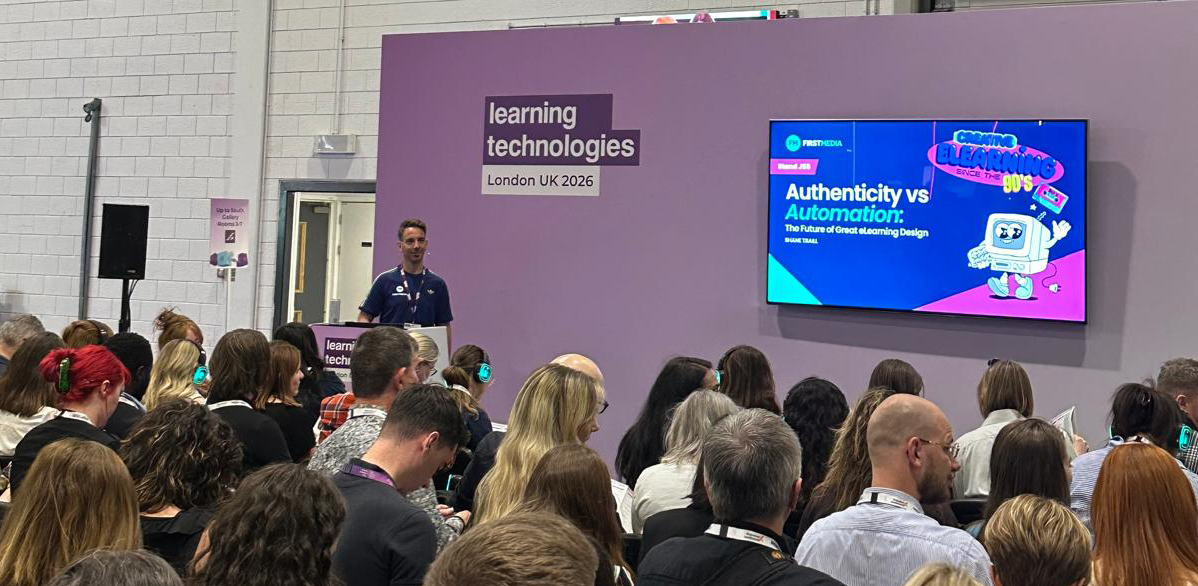
Drawing on key ideas from Shane Traill’s presentation at Learning Technologies in London - Authenticity v Automation: The Future of Great eLearning Design, this article explores why authenticity matters, where automation can help, and how L&D teams can use AI without creating generic, forgettable learning.
Great eLearning Feels Real
One of the strongest messages is simple: great elearning feels real.
That does not mean every course needs live-action video, documentary-style storytelling or expensive production. It means the learning has to feel connected to the learner’s world.
Learners engage more when they recognise the situations, language, pressures and decisions being presented to them. Whether the goal is to change behaviours, improve sales, strengthen induction, build safer environments or support compliance, learning works best when it earns both engagement and trust.
To summarise:
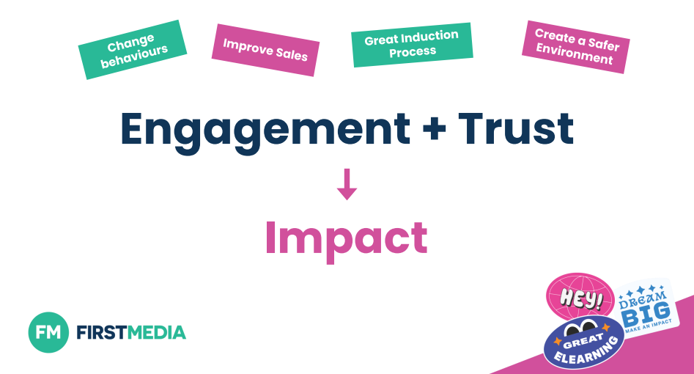
Engagement + Trust = Impact
That is a useful equation for any L&D team. If learners do not believe the content, they are unlikely to act on it. If the scenarios feel artificial, they are unlikely to reflect on their own behaviour. If the course feels like it was “built for everyone”, it may not feel relevant to anyone.
What Goes Wrong When Learning Becomes Too Generic?
A common weakness in elearning is that it becomes too broad, too neutral and too detached from the learner’s reality.
There are three common problems:
Too generic. Doesn’t feel real. Built for everyone.
This is where many automated or template-led approaches struggle. AI can produce content quickly, but unless it is guided by real audience insight, it can easily create learning that sounds plausible but lacks depth.
In L&D, generic content often shows up as:
-
scenarios that do not reflect the learner’s actual role
-
stock characters who feel interchangeable
-
dialogue that no one would say in real life
-
examples that could apply to any organisation
-
assessments that test recall rather than judgement
-
content that explains the policy but avoids the messy reality of applying it
This matters because learners are not average.
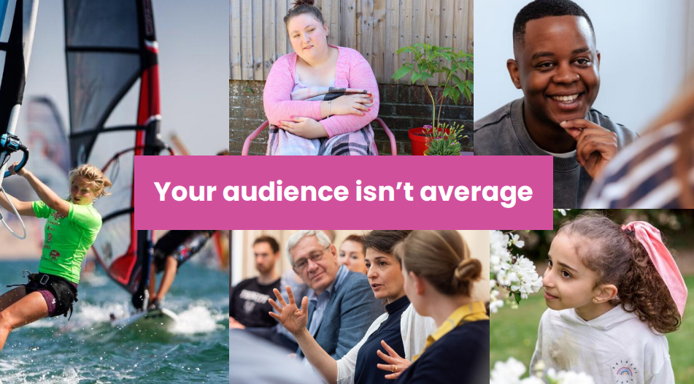
A sales team, care worker, apprentice, volunteer, manager, technician, coach or customer service agent will each bring different pressures, motivations, confidence levels and workplace realities.
Good learning design starts with those differences.
Why Authenticity Matters in eLearning Design
Authenticity is not just a creative preference. It is a performance issue.
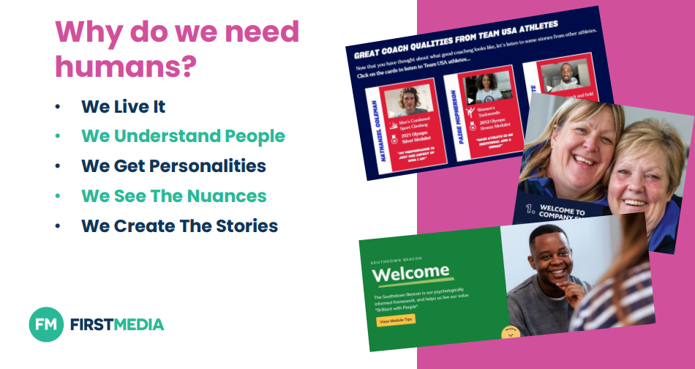
There are several reasons why humans remain essential in learning design:
We live it. We understand people. We get personalities. We see the nuances. We create the stories.
These are not minor details. They are often the difference between a course that is completed and a course that changes behaviour.
Authentic learning design draws on real stories, human nuance and believable context. It helps learners feel that the content understands them. It also builds trust, especially in topics where tone matters, such as equality and diversity, leadership, safeguarding, health and safety, customer care, coaching, inclusion or behavioural change.
AI can generate a scenario about a difficult conversation. A skilled learning designer can make that scenario feel emotionally truthful, role-specific and credible.
AI can create a quiz question. A human designer can decide whether that question measures anything useful.
AI can summarise a policy. A subject matter expert and creative team can turn it into a learning experience that helps people make better decisions under pressure.
The Risk of “Full AI” eLearning
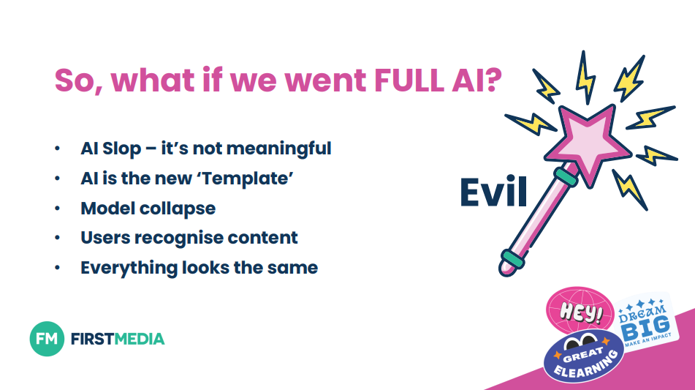
The risks include AI slop, meaningless content, everything looking the same, users recognising automated content and AI becoming the new template.
This is an important point for L&D leaders. A decade ago, many organisations overused generic elearning templates. The result was predictable: click-next courses, flat interactions, stock photography, dull quizzes and very little emotional engagement.
AI could repeat that pattern at scale.
If every organisation uses the same tools in the same way, learning content may become faster to produce but harder to distinguish. Visuals may look polished but familiar. Scripts may be grammatically correct but bland. Scenarios may be technically relevant but emotionally empty.
The danger is not that AI will make elearning worse by default. The danger is that teams will use AI to produce more content without asking whether that content is meaningful.
Automation Is Not the Enemy
The presentation does not present AI as purely negative. In fact, it shows how automation can support modern elearning design when used in the right place.
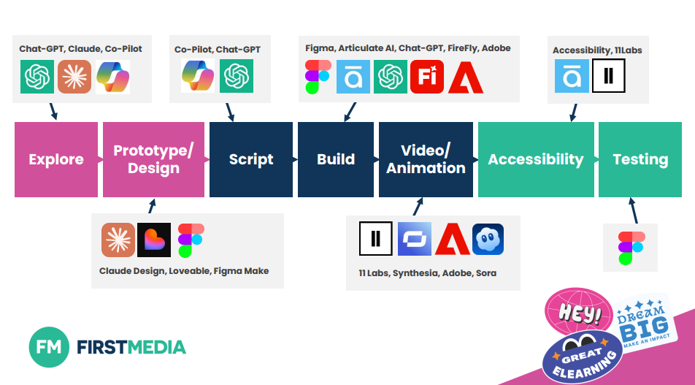
AI can be valuable across the design and development process, including:
-
exploring early ideas
-
supporting script development
-
creating design concepts
-
prototyping interactions
-
developing visual assets
-
supporting video and animation
-
improving accessibility
-
testing content
-
speeding up production workflows
Tools such as ChatGPT, Claude, Copilot, Figma, Articulate AI, Adobe Firefly, ElevenLabs, Synthesia and others can all play a role in the modern creative process.
The key is that AI should support the learning team, not replace the thinking.
The most effective model is not:
AI creates the course.
It is:
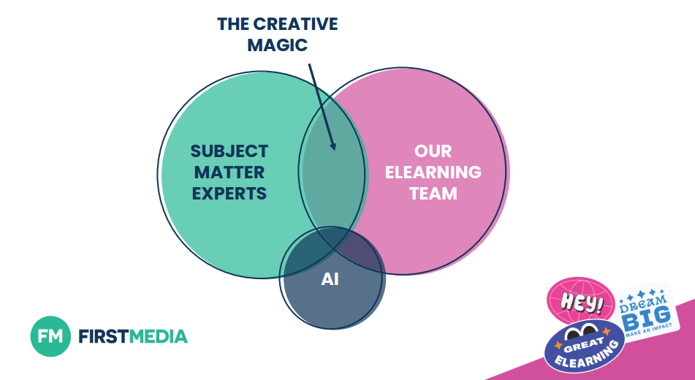
Subject matter experts + eLearning specialists + creative design + AI = better learning experiences.
That distinction matters. AI is strongest when it is part of a wider process that includes human judgement, audience understanding and creative direction.

The Human Process Still Matters
Let’s look at the creative process behind good elearning…
Before prototyping, the team explores, talks, sketches, plays with ideas, draws, discusses and iterates. That messy, human process is not waste. It is where originality often comes from.
In practical terms, this is where a learning team might ask:
- What does this audience already believe?
- What do they find difficult?
- Where do mistakes happen?
- What would a realistic decision look like?
- What tone will build trust?
- What would make this feel like their world?
- Where can we use humour, emotion, tension or challenge?
- What should the learner do, not just read?
These questions require empathy, context and judgement. AI can help generate possibilities, but people still need to decide what is right, relevant and credible.
Personalisation Will Become More Important
There’s a future where learning becomes more personalised and more connected. AI will make it easier to tailor content to different audiences, create branching experiences and connect learning with other tools.
This could be a major opportunity for L&D.
Instead of one generic course for every learner, organisations could create role-specific pathways, adaptive scenarios, tailored examples and more relevant practice activities. A manager, new starter, technical specialist and customer-facing employee could each experience the same core learning objective in a way that feels relevant to their work.
However, personalisation only works if the underlying insight is sound. AI can help vary content, but the learning strategy still needs to define what should change, why it should change and what impact is expected.
Personalisation without authenticity is just automation with extra steps.
Better User Experiences and the “Netflix Effect”
Another future-facing idea from the presentation is the “Netflix effect”. As tools improve, L&D teams will be able to create higher-quality digital experiences more easily, approaching the level of polish people associate with marketing, media and consumer technology.
This is a positive shift. Learners are used to intuitive, attractive and responsive digital experiences. Training content that feels outdated, clunky or passive can quickly lose attention.
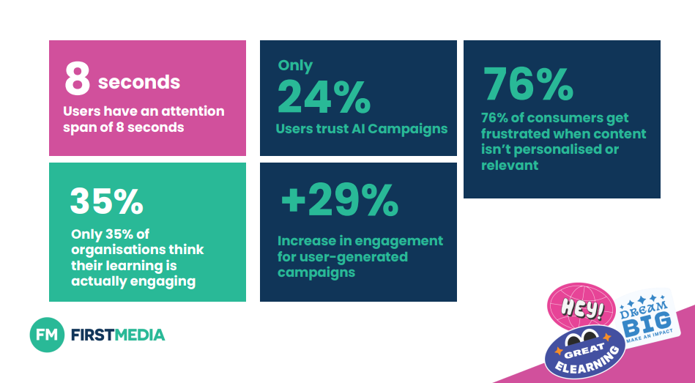
AI-assisted workflows may help learning teams produce better visual design, animation, interaction and multimedia without needing huge production budgets every time.
But again, the experience must serve the learning. Slick design is not enough. The best elearning will combine strong user experience with clear purpose, relevant challenge and authentic context.
The Rise of Standalone Learning Content
Standalone content may become more prominent, with less reliance on traditional LMS-based delivery in some situations.
This reflects a wider shift in digital learning. Not every learning experience needs to sit inside a conventional course structure. Some learning may work better as a tool, simulation, interactive guide, campaign asset, mobile experience, practice activity or performance support resource.
Automation can help make these formats quicker to prototype and build. But the same rule applies: the format should follow the learning need.
A standalone interactive experience can be powerful when it helps people practise, decide, explore or reflect. It is less useful if it is simply a more decorative way to deliver information.
Will AI Replace Learning Designers?
The answer is a clear: no, but we’ve gotta get creative!
AI is likely to change the role of learning designers, developers, writers, animators and digital learning specialists. Some production tasks will become faster. Some technical barriers will reduce. Some repetitive work may be automated.
But the value of human creativity, judgement and empathy will increase.
The best learning professionals will not be those who ignore AI. They will be those who know how to use it intelligently while protecting the authenticity of the learning experience.
That means L&D teams will need to become stronger at:
-
asking better questions
-
understanding audiences
-
designing realistic scenarios
-
creating emotionally credible stories
-
using AI as a creative partner
-
editing and refining AI-generated material
-
spotting generic or inaccurate content
-
validating content with subject matter experts
-
measuring whether learning changes behaviour
In other words, the future belongs to learning teams that can combine automation with originality.
A Practical Framework for Balancing Authenticity and Automation
For organisations exploring AI in elearning, the goal should not be to automate everything. A better approach is to decide where AI can add speed and where human input is essential.
Use automation for:
-
first-draft content exploration
-
idea generation
-
alternative wording
-
rapid prototyping
-
visual concepting
-
accessibility support
-
localisation support
-
asset variation
-
testing and QA assistance
Protect human input for:
-
audience research
-
learning strategy
-
tone of voice
-
scenario design
-
storytelling
-
emotional nuance
-
cultural context
-
subject matter validation
-
creative direction
-
final editorial judgement
This creates a healthier relationship between authenticity and automation. AI accelerates the process, while humans protect the meaning.
The Future of Great eLearning Design
The future of elearning is not a choice between authenticity and automation. It is about knowing how to combine both.
Automation can help L&D teams produce faster, prototype more freely, personalise content and improve production quality. But authenticity is what makes learning feel relevant, trusted and human.
The organisations that get this balance right will be able to create bespoke elearning that is both efficient and meaningful. They will avoid the trap of generic AI-generated content and instead use technology to support richer, more creative and more personalised learning experiences.
Great elearning has never been about content alone. It is about people, context, behaviour and change.
AI can help with the making.
Humans still need to provide the meaning.
FAQs
What does “authenticity” in eLearning actually mean, and why is it critical?
Short answer: Authenticity means learning that feels real and connected to the learner’s world - roles, language, pressures, and decisions - not just high production value. When learners recognise their reality, they engage and trust the content, which drives behaviour change. Put simply: Engagement + Trust = Impact. If scenarios feel generic or unbelievable, learners won’t reflect or act, and the course risks being completed without changing performance.
Where can AI add the most value without diluting authenticity?
Short answer: Use AI to accelerate the making, not the meaning: early idea exploration, first-draft writing, alternative wording, rapid prototyping, visual concepting and asset creation, video/animation support, accessibility checks, localisation, testing/QA, and production workflows. Combined model: Subject matter experts + eLearning specialists + creative design + AI = better learning experiences. AI can also help scale personalisation and improve UX (“Netflix effect”), but polish and adaptation only matter when they serve a clear learning purpose and an authentic, role-relevant context.
What goes wrong when courses are too generic, and how do we avoid “AI slop”?
Short answer: Generic courses often feature role-misaligned scenarios, interchangeable stock characters, unnatural dialogue, one-size-fits-all examples, recall-only assessments, and content that explains policy but dodges real-world complexity. The result is bland, low-trust learning that doesn’t transfer to action. To avoid this: start with audience differences; ask human-centred design questions (what they believe, where errors happen, what realistic decisions look like, what tone builds trust); design judgment-based practice; validate with SMEs; protect storytelling, nuance, and cultural context; use AI drafts as starting points to be edited—then measure behaviour change, not just completion.
Will AI replace learning designers and L&D specialists?
Short answer: No. AI will automate repetitive production and lower some technical barriers, but it increases the value of human creativity, judgment, and empathy. High-impact teams will excel at: asking better questions, understanding audiences, crafting realistic scenarios, creating emotionally credible stories, using AI as a creative partner, editing and refining AI outputs, spotting generic/inaccurate content, validating with SMEs, and measuring behaviour change. In short: AI helps with the making; humans provide the meaning.
Is there a practical framework for balancing authenticity and automation?
Short answer: Yes - decide deliberately what to automate and what to protect for humans.
- Use automation for: first-draft exploration, idea generation, alternative wording, rapid prototyping, visual concepting, accessibility support, localisation support, asset variation, testing and QA assistance, and speeding production workflows.
- Protect human input for: audience research, learning strategy, tone of voice, scenario design, storytelling, emotional nuance, cultural context, subject matter validation, creative direction, and final editorial judgment.
- This balance keeps production fast while safeguarding trust, relevance, and impact.
Want to explore leveraging the speed and cost-saving benefits of AI for L&D automation with the authenticity of human creativity? Contact us here at First Media.


Why choose First Media?

Improve your overall performance
Get high-quality creative, eLearning faster and stand out from the competition.

Become more agile and responsive
We deliver engaging, high-quality training and support wherever you are and whenever you need it.

Elevate your team
Our in-house team of designers will work with you every step of the way to ensure you get the right look.

Captivate your audience
We combine novel ways to appeal to our learners natural curiosity and engagement.
Make your ideas come to life with First Media.